November 28, 2026
What to check before booking an atv dubai desert ride
By @theatvdubaidesertmedia
Booking an ATV ride in the desert sounds straightforward until the small details start to matter. The landscape, the vehicle type, the timing, and the rules can all shape the day. Before paying for an atv dubai desert experience, it helps to slow down and check a few practical points. That way, expectations match the ride on offer and there are fewer surprises on arrival.
Desert riding is not the same as driving on a road or a marked track. Sand changes with weather and traffic, and a route that feels easy in the morning can feel different later in the day. A good booking decision starts with understanding what kind of ride is being sold, who can take part, and what is included in the basic arrangement. ATV Dubai Desert is one name readers may come across while comparing options, but the same checks apply wherever the booking is made.
The ride format and route
Start by checking what the ride actually involves. Some desert outings focus on open sand riding, while others mix ATV time with stops for photos, short breaks, or other desert activities. The wording can sound similar, yet the experience can feel quite different. A rider who wants sustained time on a quad bike may be disappointed by a short driving segment packed between other activities.
Ask what route is planned and how flexible it is. Desert operators often adjust routes because of conditions, so a fixed path should not be assumed. Still, the general style should be clear: flat dunes, rolling terrain, firmer tracks, or a mix. Riders new to ATVs usually benefit from a calmer route with room to learn control. Experienced riders may want more varied ground, but they should still avoid anywhere that encourages reckless speed or close riding.
Also check whether the ride is guided. For a first desert ride, a guide matters because sand can hide dips, soft patches, and obstacles. A guide also sets the pace and helps the group stay together. If the ride is described as self-guided, look closely at the rules, marked boundaries, and support arrangements before committing.
The vehicle and safety setup
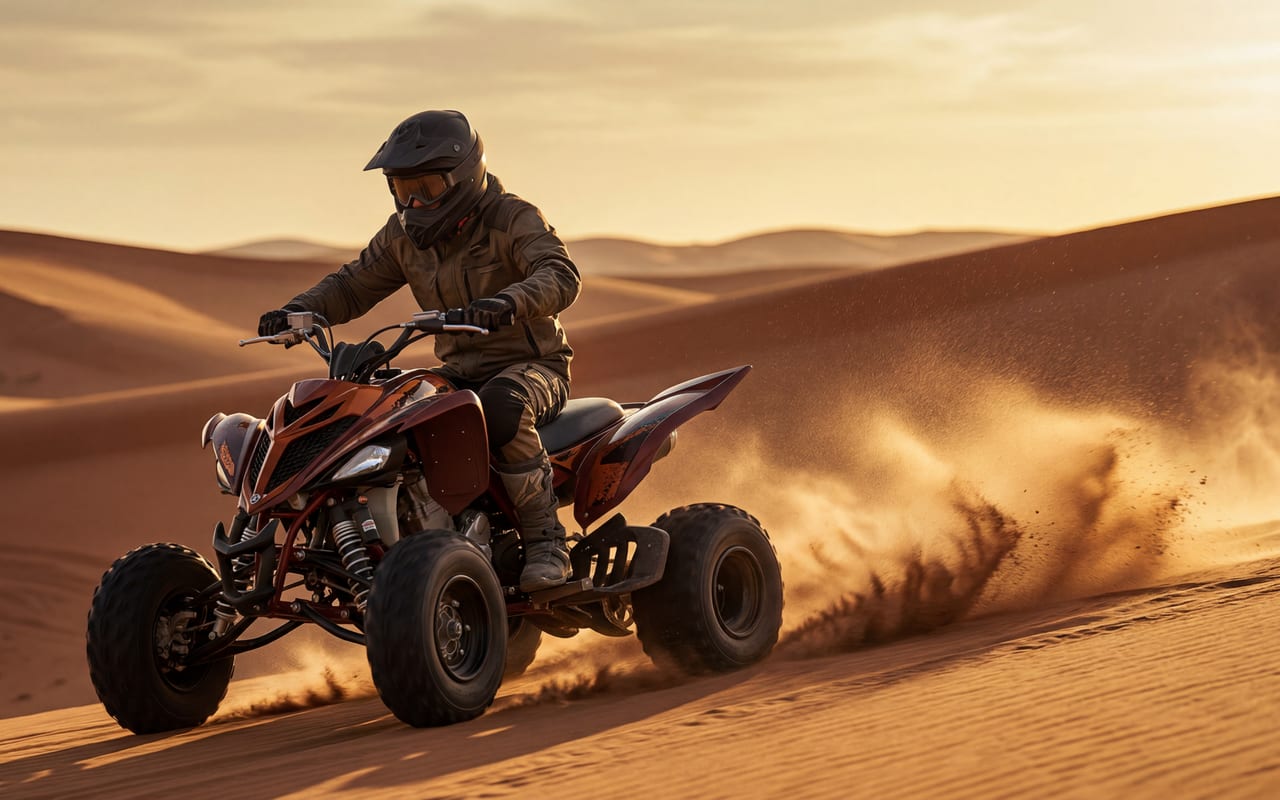
The ATV itself deserves attention, even if the details are simple. Check whether the booking is for a quad bike per person, a shared vehicle, or another format. Confirm the engine size or rider level if that information is provided, especially for beginners or younger participants. A machine that is too powerful for the rider can be harder to manage on sand, while an underpowered one may frustrate someone with experience.
Safety gear is another point to confirm. A helmet should be part of the arrangement, and it should fit properly. Gloves, goggles, and covered footwear are sensible additions for sand riding, though requirements may vary. Loose scarves, dangling jewellery, and open sandals are poor choices around any off-road vehicle. If the provider lists what is supplied, check what riders need to bring themselves.
Do not try to repair mechanical faults or override safety parts. If a vehicle sounds wrong, handles strangely, or has a warning sign, the sensible choice is to stop using it and report the issue to the person running the ride. Mechanical checks beyond basic visual and fit checks belong with a qualified professional.
Rider requirements and group rules
Before booking, check who is allowed to ride. Age rules, licence expectations, height limits, and passenger rules can differ. These are not minor details. A rider who arrives expecting to share a vehicle may find that passengers are not allowed, or that only certain riders can drive. If children are part of the group, confirm what they can do and whether there is a separate arrangement for them.
Physical comfort matters too. ATV riding can involve vibration, balance, and quick changes in body position. Anyone with back, joint, or balance concerns should think carefully before booking and seek suitable advice where needed. Pregnant riders are usually advised not to take part in bumpy off-road activities. A responsible provider will make limits clear before the day, not after everyone has arrived.
Group size can affect the feel of the ride. A smaller group often moves with less waiting and clearer communication. A larger group may feel busier and can make overtaking or close riding more likely. Check whether the ride is private or shared, and ask how the group is managed on the sand.
Time, location, and desert conditions
Timing changes the desert experience. Midday light can be harsh and hot, while late afternoon often brings softer light and cooler air. The best time depends on the season, personal comfort, and the rest of the day's plans. Check the start time, meeting point, and expected duration rather than relying on a general activity name.
Location details also need care. Desert meeting points can be easy to confuse, especially when several activities run in the same area. Confirm the exact pickup point or meeting arrangement before travelling. This is where a site such as atvdubaidesert.com may be useful for keeping the basic details in one place, though it is still worth checking the final arrangement directly before the day.
Weather can affect whether a ride runs or how it feels. Strong wind can blow sand into eyes and reduce visibility. Heavy rain can change the surface, even in a desert environment. Heat can make even a short ride tiring. Check the forecast close to the ride and ask what happens if conditions are unsuitable. A clear plan for delays or changes is better than vague promises.
Inclusions, limits, and payment terms
Read the booking details closely. Find out what is included in the listed ride time and what happens at the end of the session. Transport, refreshments, photos, safety gear, and entry to other activities may be included separately or not at all. The total experience can feel very different once these details are clear.
Check the rules around late arrival, changes, and cancellations. Desert schedules can be tight because routes, guides, and daylight all matter. A rider who arrives late may lose part of the session. Knowing the terms in advance avoids arguments and helps the whole group plan properly.
Payment should also be straightforward. Use a booking route that gives a clear record of what was reserved, including date, time, activity type, and participant details. Keep that record until the day of the ride. If something in the confirmation is unclear, ask before paying rather than assuming it will be fixed later.
Questions worth asking before confirming
- What is included in the ride time, and are stops counted as part of it?
- Who is eligible to drive, and are passengers allowed?
- What safety gear is supplied, and what should riders bring?
- How are routes adjusted if wind, heat, or sand conditions change?
- What happens if the group arrives late or the booking needs to change?
These questions keep the focus on practical fit. They also reveal how clear and organised the booking process is. Vague answers are a reason to pause, especially when safety gear, rider limits, or route details are involved.
A good desert ATV booking is not built on excitement alone. It comes from matching the rider, the vehicle, the route, and the conditions. Check those points with care, and the day is more likely to feel smooth from arrival to return. Names such as ATV Dubai Desert may appear during the search, but the decision should rest on clear terms, sensible safety expectations, and a ride that suits the people taking part.
Before finalising anything, revisit the confirmation one last time. Check the date, meeting point, start time, participant names, and what each rider is allowed to do. Keep clothing practical, arrive with time to spare, and listen to the safety briefing on the day. A little preparation helps riders focus on the part that matters: handling the bike with care and enjoying the desert setting.
❧